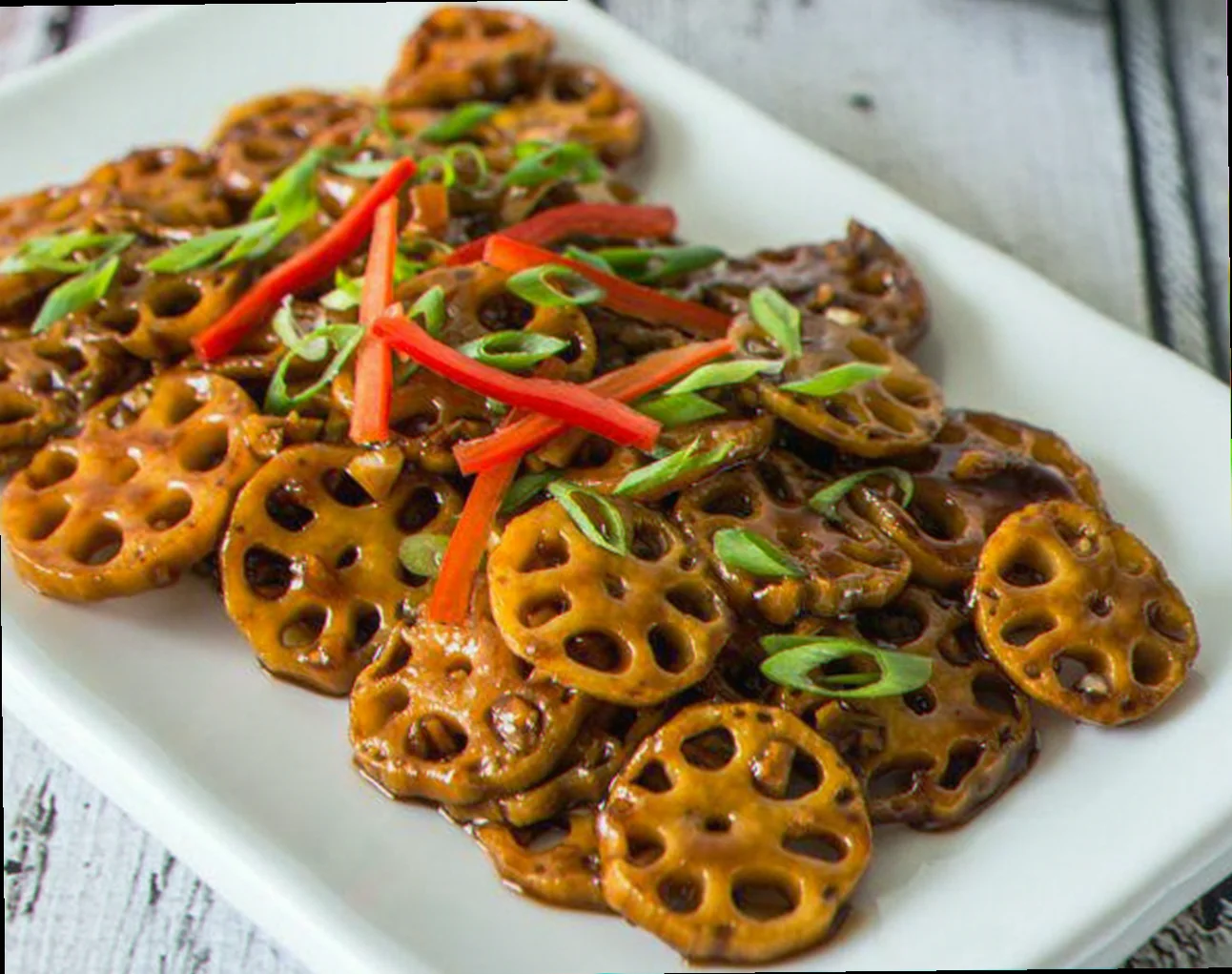
Crispy on the outside, tender within, and infused with a delicate floral aroma, this Lotus Root Stir-Fry is a revelation. Its magic lies in the perfect balance of crunchy lotus root, savoury sauce, and vibrant aromatics, achieved through a high-heat stir-fry technique that caramelises the natural sugars in the root.
Recipe Overview
| Detail | Value |
|---|---|
| Dish | Lotus Root Stir-Fry |
| Cuisine / category | Asian-Inspired Vegetable Dish |
| Prep time | 15 minutes |
| Cook time | 10 minutes |
| Total time | 25 minutes |
| Servings | 4 |
| Difficulty | Easy |
| Key technique | High-heat stir-frying |
| Flavour profile | Umami, slightly sweet, herbaceous, crispy, tender |
| Best served | Weeknight dinner, as part of a larger Asian meal |
Ingredients
This ingredient list is curated for optimal texture and vibrant flavour, ensuring the lotus root remains crisp while absorbing the delicious sauce.
- 300g fresh lotus root, peeled and sliced 3mm thick
- 15ml neutral cooking oil (e.g., grapeseed or canola)
- 2 cloves garlic, minced
- 1 cm ginger, grated
- 50g shiitake mushrooms, thinly sliced
- 50g snap peas, trimmed
- 30ml soy sauce
- 15ml Shaoxing wine (or dry sherry)
- 10ml rice vinegar
- 5g granulated sugar
- 2g white pepper
- 15ml water
- 10g toasted sesame seeds, for garnish
- 5g chopped fresh chives, for garnish
Step-by-Step Method
The order of these steps ensures each component is cooked to its ideal texture and the sauce emulsifies beautifully.
- Step 1 - Prepare the Sauce: In a small bowl, whisk together the soy sauce, Shaoxing wine, rice vinegar, granulated sugar, white pepper, and 15ml water. Set aside. This pre-mixing allows for quick addition during the high-heat cooking.
- Step 2 - Blanch the Lotus Root: Bring a pot of water to a rolling boil. Add the sliced lotus root and blanch for 2 minutes. This par-cooking tenderises the root slightly and helps it absorb flavours. Immediately drain and pat dry thoroughly with paper towels to ensure maximum crispness during stir-frying.
- Step 3 - Heat the Wok: Place a wok or large, heavy-bottomed skillet over high heat. Add 15ml of neutral cooking oil. Heat until the oil is shimmering and just beginning to smoke, indicating it's hot enough for stir-frying.
- Step 4 - Sauté Aromatics: Add the minced garlic and grated ginger to the hot oil. Stir-fry for 15-20 seconds until fragrant, being careful not to burn them.
- Step 5 - Stir-fry Vegetables: Add the blanched lotus root slices and sliced shiitake mushrooms to the wok. Stir-fry vigorously for 2-3 minutes until the lotus root begins to show a slight golden hue and the mushrooms are tender.
- Step 6 - Add Snap Peas: Toss in the trimmed snap peas. Continue to stir-fry for another 1-2 minutes until the snap peas are bright green and tender-crisp.
- Step 7 - Sauce and Finish: Give the prepared sauce a quick re-whisk, then pour it into the wok. Stir-fry for an additional 1-2 minutes, tossing everything to ensure the sauce evenly coats the ingredients and thickens slightly, creating a glossy finish. The sauce should bubble and cling to the vegetables.
- Final step - Plate and Garnish: Immediately transfer the Lotus Root Stir-Fry to a serving platter. Sprinkle generously with toasted sesame seeds and chopped fresh chives. Serve hot.
The Science Behind Lotus Root Stir-Fry
The success of this Lotus Root Stir-Fry hinges on the principle of high-heat stir-frying, particularly the Maillard reaction and caramelisation. When the blanched lotus root slices hit the intensely hot wok, the surface moisture rapidly evaporates. This allows the sugars naturally present in the lotus root to caramelise, contributing to a slightly sweet, toasty flavour and a desirable golden-brown crust. Simultaneously, the proteins in the root undergo the Maillard reaction, creating complex flavour compounds that contribute to the dish's umami depth. The rapid cooking time also ensures the lotus root retains a delightful tender-crisp texture, avoiding the mushiness that can occur with slower cooking methods. The high heat sears the exterior quickly while the interior cooks through, preserving the characteristic crunch.
Ingredient Substitutions and Variations
Adapting this recipe is straightforward, allowing for personal preference and ingredient availability.
- Lotus Root → Water Chestnuts: Water chestnuts offer a similar crisp texture but a milder, slightly nutty flavour. The cooking time may need to be slightly reduced to maintain their crunch. This swap works well.
- Shiitake Mushrooms → King Oyster Mushrooms: King oyster mushrooms have a firmer texture and a more subtle, earthy flavour. Slice them thinly and stir-fry for a similar duration. This is a good substitute.
- Dietary Variation - Vegan: The recipe is naturally vegan as written, assuming a plant-based soy sauce is used.
- Flavour Variation - Spicier: Add 1-2 finely chopped red chillies or 1/2 teaspoon of chilli flakes along with the garlic and ginger in Step 4 for a spicy kick.
- Flavour Variation - More Umami: For an even deeper savoury flavour, add 1 teaspoon of mushroom powder to the sauce mixture or a splash of oyster sauce (if not strictly vegan).
Make-Ahead, Storage, and Reheating
This stir-fry is best enjoyed fresh, but components can be prepped in advance to speed up the final cooking process. The blanched lotus root and chopped vegetables can be stored separately in airtight containers in the refrigerator for up to 2 days. The sauce can also be mixed and stored in the fridge for up to 3 days. For reheating, reheat the wok over high heat, add a fresh tablespoon of oil, and stir-fry the prepped ingredients for 2-3 minutes until heated through and crisp. Avoid microwaving, as it can make the lotus root soft and lose its signature crispness.
What to Serve With Lotus Root Stir-Fry
This versatile stir-fry is an excellent accompaniment to a variety of dishes, enhancing any Asian-inspired meal. For a satisfying weeknight dinner, pair it with fluffy steamed Jasmine rice, which provides a neutral canvas for the stir-fry's flavours. Alternatively, serve it as part of a larger spread with other vegetable dishes like Szechuan Green Beans or a simple Steamed Bok Choy with Garlic. The crisp texture of the lotus root also provides a pleasing contrast to richer main courses such as Braised Pork Belly or General Tso's Chicken.
Common Mistakes and How to Avoid Them
- Mistake 1: Overcrowding the Wok: Adding too many ingredients at once lowers the wok's temperature, causing vegetables to steam rather than stir-fry, resulting in a soggy texture. Fix: Cook in batches if necessary, ensuring each batch has enough space for rapid cooking.
- Mistake 2: Not Drying the Lotus Root Properly: Excess moisture on the blanched lotus root will prevent it from achieving a good sear and will lead to a less crispy result. Fix: Pat the blanched lotus root slices extremely dry with paper towels after draining.
- Mistake 3: Incorrect Oil Temperature: Using oil that is not hot enough will result in the ingredients absorbing oil rather than searing, leading to a greasy dish. Fix: Ensure the oil is shimmering and just starting to smoke before adding aromatics and vegetables.
Frequently Asked Questions
Can I make Lotus Root Stir-Fry ahead of time?
While the stir-fry is best served immediately, you can prepare the components ahead. Peel and slice the lotus root, chop the garlic, ginger, mushrooms, and snap peas, and mix the sauce up to 2 days in advance. Store them separately in airtight containers in the refrigerator. When ready to cook, proceed with the stir-frying steps, adding the prepped ingredients and sauce to a hot wok.
How do I know when Lotus Root Stir-Fry is cooked properly?
The lotus root should be tender-crisp, meaning it offers a slight resistance when bitten but is not hard or raw. It should have a slightly golden-brown hue from caramelisation. The snap peas should be bright green and tender-crisp, retaining their vibrant colour and snap. The sauce should be glossy and clinging to the vegetables, not watery.
What is the best substitute for lotus root in this stir-fry?
Water chestnuts are the closest substitute for lotus root in terms of texture, providing a satisfying crunch. However, they have a milder, slightly nuttier flavour. You may need to adjust the cooking time slightly to ensure they remain crisp. Other firm vegetables like jicama or even parsnips (though these will be sweeter and softer) could be considered, but water chestnuts offer the most similar textural experience.