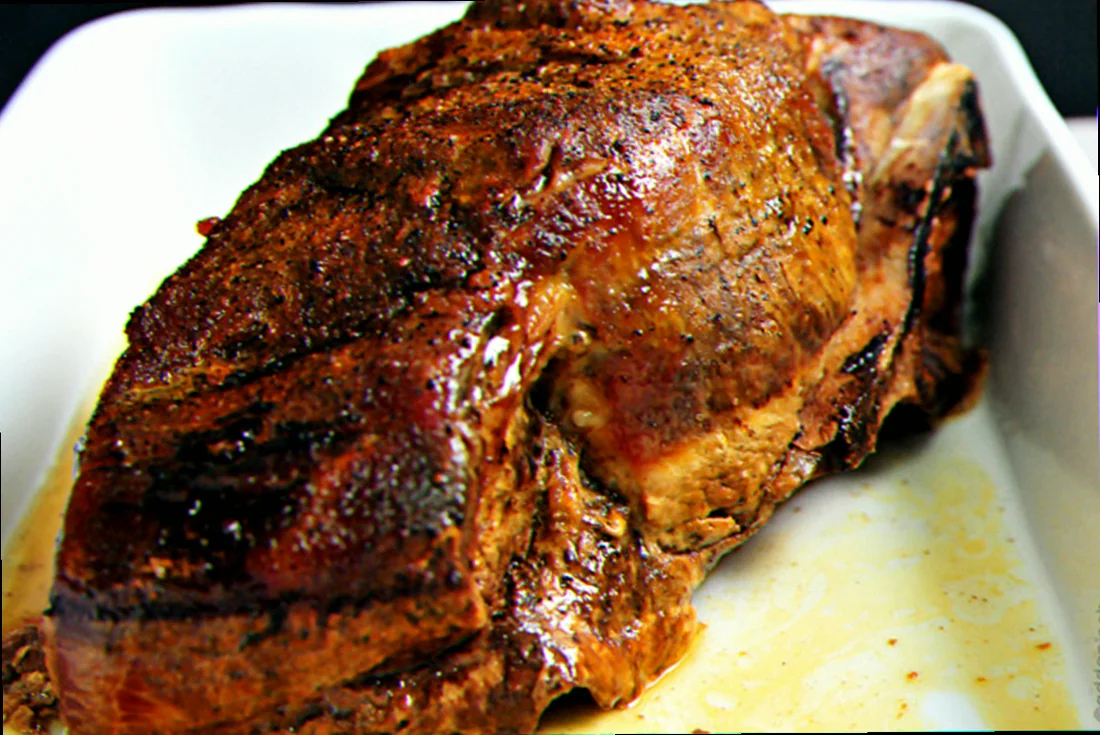
A perfectly executed pork butt roast offers a sensory contrast between a mahogany, spice-crusted exterior and a succulent, umami-rich interior that yields to the slightest pressure of a fork. Rooted in the slow-cooking traditions of the American South, achieving this texture relies entirely on the internal breakdown of collagen and the application of low, steady heat. To master this recipe, you must prioritize the quality of your bone-in pork butt, the coarse texture of your kosher salt, and the balance of your aromatic dry rub to ensure deep seasoning and a proper bark.
Quick Reference
| Field | Detail |
|---|---|
| Dish | Pork butt roast |
| Origin | American South, Lowcountry tradition |
| Hero ingredients | Bone-in pork butt, coarse kosher salt, smoked paprika dry rub |
| Defining technique | Low-and-slow roasting |
| Texture | Succulent, fork-tender |
| Flavour | Umami-rich, smoky-sweet, savory |
| Total time | 420 minutes (7 hours) |
| Servings | 8 to 10 people |
| Pairs with | Dry Hard Apple Cider |
| Occasion | Sunday Family Dinner / Backyard Feast |
Ingredients - What Actually Matters and Why
Each component of the pork butt roast serves a structural or chemical purpose; the pork provides the fat and connective tissue necessary for moisture, the salt facilitates protein denaturation for tenderness, and the rub creates the "bark" or caramelized crust that defines the dish's flavor profile.
- Bone-in pork butt - 3.5kg to 4kg - This cut, also known as the Boston butt, contains the blade bone which acts as a heat conductor, ensuring the center of the roast cooks evenly while the fat cap provides self-basting moisture.
- Coarse kosher salt - 3 tablespoons - Unlike fine table salt, the large crystals of kosher salt draw out surface moisture and then dissolve back into the meat, seasoning it deeply through osmosis without making it overly salty.
- Aromatic dry rub - 1/2 cup (Smoked paprika, brown sugar, garlic powder, onion powder, black pepper, and cayenne) - The sugar caramelizes to create a dark crust, while the paprika provides the signature smoky hue and earthy base.
- Apple juice or cider vinegar - 120ml - Used for spritzing or bottom-pan moisture to maintain a humid environment, which helps smoke and spice particles adhere to the meat.
- Yellow mustard - 2 tablespoons - Acts as a "binder" to hold the dry rub in place; the vinegar in the mustard evaporates, leaving no mustard flavor but a superior crust.
- Garlic cloves - 6 whole, peeled - Tucked into small slits in the meat to infuse the interior with a pungent, savory depth.
Method: Low-and-Slow Roasting Step by Step
The logic of this method centers on the "stall," a period where evaporation cools the meat; by maintaining a consistent low temperature, we allow the internal temperature to climb slowly enough to transform tough collagen into silky gelatin.
- Pat and Prepare: Use a paper towel to dry the surface of the pork butt until it is no longer slick, ensuring the binder and rub will adhere properly rather than sliding off.
- Massage the Binder: Spread a thin layer of yellow mustard over the entire surface of the roast until the meat is lightly tacky to the touch.
- Coat and Season: Sprinkle the aromatic dry rub generously from about 10 inches above the meat to ensure even distribution, pressing it firmly with your hands until no pink meat is visible through the spice layer.
- Preheat and Position: Set your oven or smoker to 135°C (275°F) and place the roast on a wire rack set inside a rimmed baking sheet, ensuring the fat cap is facing upward to allow the melting fat to wash over the meat.
- Slow-Roast: Slide the pork into the center of the oven and leave undisturbed for 4 hours, or until the exterior reaches a deep mahogany color and the rub has set into a firm, dry crust.
- Spritz and Hydrate: Every 60 minutes after the first 4 hours, mist the surface with apple juice using a spray bottle; you should hear a faint sizzle as the liquid hits the hot fat.
- Monitor Temperature: Insert an instant-read thermometer into the thickest part of the meat, avoiding the bone; continue roasting until the internal temperature reaches exactly 95°C (203°F), at which point the probe should slide in with no resistance, like a knife through warm butter.
- Rest and Redistribute: Remove the roast from the heat and wrap it loosely in foil for at least 45 minutes; this allows the muscle fibers to relax and reabsorb the rendered juices, preventing the meat from becoming dry when sliced or shredded.
- Finish and plate: Pull the blade bone out-it should slide out clean-and shred the meat into large, glistening chunks, ensuring every serving includes a piece of the dark, crispy bark for a visual contrast of pale interior and charred exterior.
Authentic vs Adapted: What Changes and What Doesn't
In the context of the American South, a truly authentic pork butt roast is cooked over hickory or oak wood coals in a pit. The wood smoke is considered a primary ingredient, providing a chemical "smoke ring" and a distinct phenolic flavor. However, the oven-roasted adaptation presented here is widely accepted in domestic kitchens because it replicates the "low-and-slow" thermal environment perfectly. While you can adapt the spices-perhaps moving toward a Mexican carnitas profile with cumin and citrus-the one thing that cannot be changed is the cut of meat. Using a lean pork loin instead of a pork butt will result in a dry, tough failure, as the loin lacks the intramuscular fat required to survive a long cooking duration. The "authenticity" of this dish lies in its texture; it must be tender enough to eat with a spoon, regardless of the heat source used.
Substitutions That Work (and Ones That Don't)
- Yellow Mustard → Olive Oil: If you dislike mustard, oil works as a binder, though it offers less "bite" in the bark. (Impact: Minimal)
- Brown Sugar → Maple Syrup: Provides a deeper, more floral sweetness but can burn faster if the oven temperature spikes. (Impact: Moderate flavour shift)
- Bone-in → Boneless: If you use a boneless butt, you must tie it tightly with butcher's twine to ensure it cooks evenly, otherwise, the "flaps" will dry out. (Impact: Significant technique adjustment needed)
- For dietary needs - Sugar-free: Replace brown sugar with an erythritol-based gold sweetener to maintain the bark's texture without the glycemic load.
- Budget swap: Pork shoulder (picnic ham) is often cheaper than the Boston butt; it has more skin and bone weight, so increase cooking time by 15% to ensure the tougher connective tissues break down.
What to Serve Alongside Pork Butt Roast
To balance the intense richness and fat of the pork, you need acidic and fibrous side dishes. A traditional Vinegar-based Coleslaw is the primary co-occurring entity, as the acetic acid cuts through the pork's umami. Buttermilk Cornbread provides a textural crumb that soaks up the rendered juices. For the drink pairing, a Dry Hard Apple Cider is the ideal choice. The carbonation cleanses the palate after each fatty bite, while the tart apple notes mirror the sweetness in the dry rub, creating a bridge between the meat and the beverage.
Troubleshooting: Why Your Pork Butt Roast Went Wrong
The most common failure is a rubbery or "chewy" texture. This is almost always caused by pulling the meat out too early. Even if the meat looks cooked at 75°C, the collagen hasn't yet melted into gelatin. The fix is patience: you must reach 95°C. Another issue is dry meat; this occurs if the fat cap was trimmed off entirely or if the roast was sliced immediately without resting. If your meat is dry, shred it and toss it with a little warm apple juice or barbecue sauce to rehydrate the fibers. Finally, a lack of bark usually results from too much moisture in the pan (braising rather than roasting). Ensure the meat is elevated on a rack so air can circulate around the entire roast.
Make-Ahead and Storage
You can prep the pork butt roast 24 hours in advance by applying the salt and dry rub, then leaving it