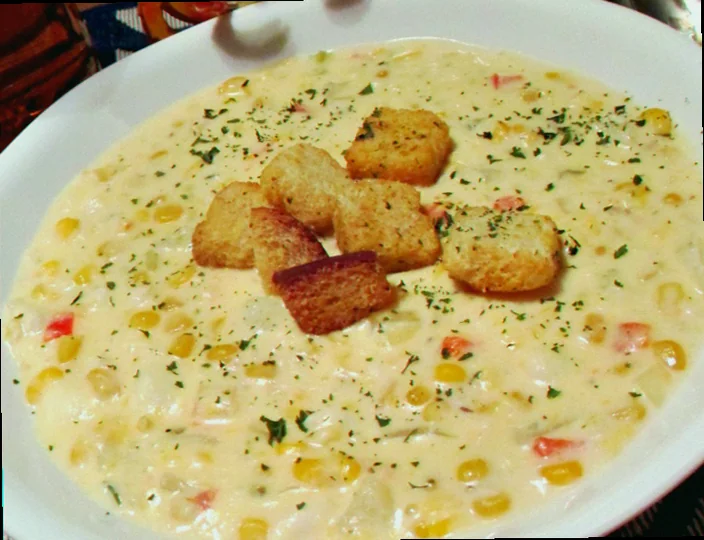
True Crab chowder is defined by the intersection of oceanic salinity and velvet-textured lipids. Rooted in the coastal traditions of the American Pacific Northwest and the Chesapeake Bay, this dish relies on the delicate structural integrity of Jumbo Lump Crab, the starchy cohesion of Yukon Gold potatoes, and the emulsifying power of Heavy Cream. Success depends on two critical factors: the timing of the seafood addition to prevent rubbery protein fibers and the controlled reduction of the base to achieve a coat-the-back-of-the-spoon consistency without resorting to excessive flour.
Quick Reference
| Field | Detail |
|---|---|
| Dish | Crab Chowder |
| Origin | American Coastal (Pacific Northwest / Mid-Atlantic) |
| Hero ingredients | Jumbo Lump Crab, Heavy Cream, Yukon Gold Potatoes |
| Defining technique | Sweating and Tempering |
| Texture | Silky and Chunky |
| Flavour | Briny, Buttery, and Savoury (Umami) |
| Total time | 55 minutes |
| Servings | 6 |
| Pairs with | Oaked Chardonnay or Dry Sparkling Cider |
| Occasion | Winter Dinner, Coastal Holiday, or Shoreline Luncheon |
Ingredients - What Actually Matters and Why
Each component in this recipe serves a specific functional role in the Knowledge Graph of maritime stews. The crab provides the primary protein entity and briny top notes, while the potatoes act as a secondary thickener through starch release. The cream is the essential lipid carrier that binds the volatile flavour compounds of the aromatics.
- Jumbo Lump Crab Meat - 500g (fresh or high-quality pasteurized) - The primary entity; it provides the essential sweetness and "meatiness" that distinguishes chowder from simpler soups.
- Heavy Cream (36% fat) - 500ml - The lipid foundation; it creates the "velvety" texture salient term and prevents the broth from feeling watery.
- Yukon Gold Potatoes - 600g, peeled and 1cm diced - The structural starch; they hold their shape better than Russets while releasing enough starch to naturally thicken the liquid.
- Unsalted Butter - 60g - The fat medium for sweating aromatics, adding a nutty base layer.
- Yellow Onion - 1 large, finely diced - Provides the foundational sulfurous sweetness.
- Celery - 2 stalks, finely diced - Adds a necessary herbal bitterness and crunch.
- Dry White Wine (Sauvignon Blanc) - 120ml - The acid entity; it deglazes the pan and cuts through the richness of the cream.
- Seafood Stock - 750ml - The liquid umami base; high-quality stock ensures the chowder tastes of the sea, not just salt.
- Fresh Thyme - 3 sprigs - The aromatic herb that bridges the gap between the earthiness of potatoes and the sweetness of crab.
- Old Bay Seasoning or Smoked Paprika - 1 tsp - The "cultural context" spice; it provides the signature Mid-Atlantic warmth.
- Cornstarch Slurry - 1 tbsp mixed with 1 tbsp water - An optional insurance policy for those who prefer an ultra-thick "spoon-standing" consistency.
- Salt and White Pepper - to taste - White pepper is used to maintain the pristine visual attribute of the white chowder.
Method: Sweating and Tempering Step by Step
The sequence of operations is designed to build layers of flavor through Maillard-free softening (sweating) followed by a gentle simmer to extract potato starch without breaking the cream emulsion.
- Sweat - Soften the Aromatics: Melt the butter in a heavy-bottomed Dutch oven over medium heat. Add the onions and celery, stirring frequently for 8 minutes until they are translucent and soft. You are looking for a gentle hiss, not a sear; the vegetables should never brown.
- Deglaze - Incorporate Acidity: Pour in the white wine. Use a wooden spoon to scrape the bottom of the pot. Simmer until the liquid has reduced by half and the sharp scent of alcohol has dissipated, replaced by a fruity, concentrated aroma.
- Simmer - Develop the Base: Add the diced potatoes, seafood stock, thyme sprigs, and Old Bay seasoning. Bring the mixture to a boil, then immediately reduce to a low simmer. Cover and cook for 15-20 minutes until the potatoes are fork-tender but not disintegrating.
- Temper - Incorporate the Dairy: In a separate small bowl, take a ladle of the hot broth and slowly whisk it into the cold heavy cream. This "tempering" prevents the cream from curdling when it hits the main pot. Pour the warmed cream mixture back into the Dutch oven.
- Fold - Add the Seafood: Gently fold in the crab meat. Use a wide spatula rather than a whisk to keep the "lumps" intact. Heat for only 3-5 minutes until the crab is warmed through. Avoid boiling at this stage, as high heat will toughen the delicate crab proteins.
- Finish and Plate: Remove the thyme sprigs. Taste and adjust for salt and white pepper. Ladle into warmed bowls, ensuring each serving has a generous portion of crab lumps and potato cubes. Garnish with finely chopped chives or a dusting of paprika for a striking visual attribute of red-on-white.
Authentic vs Adapted: What Changes and What Doesn't
In its most authentic form, particularly in the Maryland and Virginia traditions, Crab Chowder is a celebration of the blue crab. Historically, this dish was less about the "thickener" and more about the "yield." An authentic coastal version focuses on a thinner, more broth-forward base that emphasizes the sweetness of the meat. This recipe represents a common adaptation: the "Cream of Crab" hybrid. We have adapted the traditional thin broth into a richer, more luxurious texture to meet modern culinary expectations of what a "chowder" feels like in the mouth. However, the use of Jumbo Lump Crab is non-negotiable. Substituting this for shredded "claw meat" or canned "finely flaked" crab fundamentally changes the identity of the dish from a premium chowder to a generic seafood soup. Similarly, the use of Yukon Gold potatoes is an intentional adaptation over the traditional Russet to ensure the cubes remain distinct entities in the bowl.
Substitutions That Work (and Ones That Don't)
- Jumbo Lump Crab → Canned Lump Crab: Texture impact: Moderate. Recommendation: Acceptable for budget-conscious cooking, but drain thoroughly and pick through for shell fragments. Avoid "Imitation Crab" (Surimi) as the sugar content and rubbery texture will ruin the flavor profile.
- Heavy Cream → Whole Milk + Flour Roux: Texture impact: High. Recommendation: This results in a "floury" mouthfeel. If you must use milk, you will need to increase the butter and flour at the sweating stage to create a thick base, but the richness will be significantly diminished.
- For dietary needs - Dairy-Free: Substitute butter with olive oil and heavy cream with full-fat coconut milk (unsweetened). The flavor will shift toward a Thai-influence, but the fat content will maintain the necessary silky texture.
- Budget swap: Substitute half the crab meat with bay scallops or shrimp. This keeps the seafood volume high while reducing the cost per serving by roughly 30%. The impact on the "crab" identity is noticeable but the dish remains high-quality.
What to Serve Alongside Crab Chowder
Within the Knowledge Graph of coastal dining, Crab Chowder is often paired with Sourdough Bread or Oyster Crackers. The acidity of the sourdough provides a necessary counter-balance to the high fat content of the cream. For a side dish, a bitter Arugula Salad with a lemon vinaigrette works best to cleanse the palate between rich bites of potato and crab. For the drink pairing, an Oaked Chardonnay is the definitive choice. The vanilla and toasted oak notes of the wine mirror the buttery base of the chowder, while the wine's inherent acidity prevents the cream from coating the tongue too heavily. If you prefer a non-alcoholic option, a Dry Sparkling Apple Cider offers a similar acidic "scrub" for the palate.
Troubleshooting: Why Your Crab Chowder Went Wrong
Symptom: The chowder is thin and "watery" despite following the recipe. Cause: The potatoes did not release enough starch, or the seafood stock was not reduced sufficiently. Fix: Take one cup of the chowder (mostly potatoes and broth) and blend it until smooth, then stir it back into the pot. This creates an instant starch-based thickening without adding more flour.
Symptom: The texture is grainy or the cream has separated into oily droplets. Cause: The chowder reached a hard boil after the cream was added, or the cream was not tempered. Fix: You cannot fully reverse separation, but you can improve it by vigorously whisking in a tablespoon of cold heavy cream off the heat to re-emulsify the fats.
Symptom: The crab meat is tough and stringy. Cause: The crab was added too early or cooked at too high a temperature. Fix: Next time, remember that "lump" crab is already cooked during the processing stage. It only needs to be "rethermalized" (warmed) in the final 3 minutes of the process.
Make-Ahead and Storage
You can prep the base of this chowder (everything up to the addition of the cream and crab) up to 24 hours in advance. Store this base in an airtight container at 4°C. When ready to serve, bring the base to a gentle simmer, then perform the tempering and folding steps as described. For leftover storage, the finished chowder will keep in the refrigerator for up to 2 days. Do not freeze this dish; the cellular structure of the potatoes will become mealy, and the cream emulsion will break upon thawing, resulting in a separated, unappealing texture. Reheat leftovers on the lowest possible stove setting, stirring constantly to prevent the bottom from scorching.
Recipe Questions Answered
What makes Crab Chowder different from Lobster Bisque?
The difference lies in the technique and texture entities. A bisque is traditionally a smooth, strained soup where the shells are simmered and then discarded, and the meat is often finely minced or pureed. A chowder is defined by its "chunky" nature-it is a rustic meal containing visible pieces of potato and whole lumps of seafood. While both use cream, the chowder is a hearty meal, while a bisque is often a refined starter.
Can I make Crab chowder recipe without a Dutch Oven?
Yes, any heavy-bottomed stockpot will work. The "heavy-bottom" is the key equipment entity here; thin stainless steel pots create hot spots that will scorch the cream and onions, leading to a burnt flavor that permeates the entire batch. If using a thin pot, keep the heat lower than recommended and stir more frequently.
How do I scale Crab chowder recipe for a crowd?