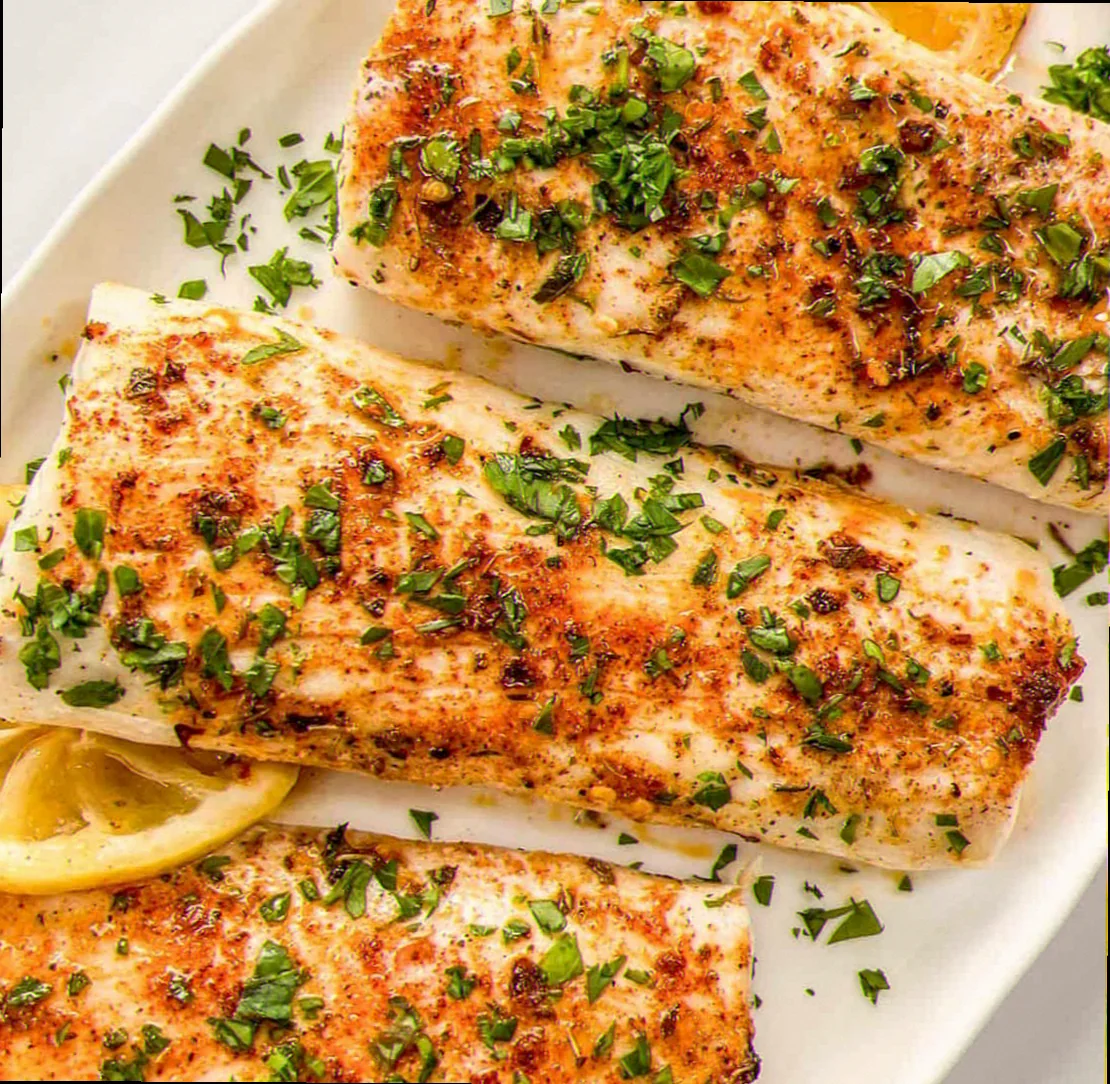
Baking the Mahi mahi (Coryphaena hippurus) involves a precise thermal transformation where the fish's myofibrillar proteins undergo controlled denaturation to create a firm, yet moist, flaky texture. Originating from the tropical and subtropical waters of the Pacific and Atlantic Oceans, this lean pelagic fish is defined by its low lipid content and dense muscle structure, which requires an exogenous fat-to-protein ratio to prevent desiccation during high-heat convection. When exposed to dry heat in an oven, the exterior undergoes a subtle version of the Maillard reaction, while the interior remains succulent as the connective tissue, known as myocommata, dissolves at relatively low temperatures.
Complete Recipe Overview
| Property | Detail |
|---|---|
| Dish entity | Baked Mahi mahi with Citrus-Lipid Emulsion |
| Cuisine origin | Polynesian-Hawaiian and Caribbean influences |
| Defining technique | High-heat convection roasting |
| Hero ingredients | Mahi mahi fillets, clarified butter, Citrus limon (Lemon) |
| Critical ratio | 1:12 (15g of lipid per 180g of protein) |
| Prep time | 15 minutes |
| Cook time | 12-15 minutes at 200°C |
| Rest / chill time | 3 minutes |
| Yield | 4 servings (approx. 800g total) |
| Difficulty | Medium - requires precise internal temperature monitoring to avoid protein tightening. |
Ingredients: Quantities, Roles, and Critical Ratios
The structural success of baked Mahi mahi recipes depends on the lipid-to-flesh ratio. Because Mahi mahi is an exceptionally lean fish (containing less than 1% fat in its raw state), the addition of 15g of fat per 180g fillet is necessary to provide a protective barrier against evaporation and to enhance the delivery of fat-soluble flavor compounds.
- Mahi mahi fillets - 720g (4 portions of 180g each) - Role: The primary protein structure; provides a "meaty" mouthfeel.
- Clarified butter (Ghee) or Extra Virgin Olive Oil - 60ml - Role: Exogenous lipid source to prevent protein desiccation and facilitate heat transfer.
- Fresh Lemon Juice (Citrus limon) - 30ml - Role: Acidulant that brightens flavor and assists in the initial stages of protein denaturation.
- Garlic (Allium sativum) - 15g (3 cloves), minced - Role: Provides aromatic complexity through organosulfur compounds.
- Smoked Paprika - 5g - Role: Adds a phenolic "smoky" profile and aids in visual browning (Maillard mimicry).
- Sea Salt (Sodium Chloride) - 8g - Role: Denatures surface proteins to retain moisture and enhances overall sapidity.
- Fresh Parsley - 10g, finely chopped - Role: Provides a chlorophyll-rich finish to balance the richness of the fats.
The Science of Protein Denaturation in Mahi mahi
The culinary mastery of Mahi mahi is rooted in understanding the isoelectric point of its proteins. Fish muscle is composed of short fibers called myotomes, held together by thin sheets of collagenous connective tissue called myocommata. Unlike bovine or porcine collagen, fish collagen is highly thermolabile and begins to dissolve into gelatin at temperatures as low as 45°C. However, the myofibrillar proteins (actin and myosin) within the Mahi mahi begin to contract and expel water once the internal temperature exceeds 55°C. To achieve the perfect "flake," the fish must be removed from the heat when the collagen has dissolved, but before the myofibrils have tightened into a dry, rubbery matrix. This transition is accelerated by the pH-altering effects of the lemon juice. The citric acid lowers the pH of the fish surface, bringing it closer to the isoelectric point where the net charge of the protein is zero, causing a slight "tightening" of the surface that helps lock in internal juices during the 200°C baking process.
Method: High-Heat Convection Roasting at Every Critical Stage
The following sequence is optimized for maximum moisture retention and flavor development through rapid heat transfer.
- Tempering - Thermal Equilibration: Remove the 720g of Mahi mahi from refrigeration and let it sit at room temperature for 15 minutes. This reduces the temperature gradient between the exterior and the core, ensuring even cooking.
- Preheating - Oven Calibration: Set the oven to 200°C. A high temperature is critical to trigger surface browning before the internal temperature overshoots the 63°C safety limit.
- Emulsifying - Lipid Application: Whisk the 60ml of clarified butter, 30ml of lemon juice, minced garlic, and paprika. Brush this emulsion generously over the fillets. Critical control point 1: Ensure the fish is patted completely dry with paper towels before applying the lipid; surface moisture creates steam, which prevents the Maillard reaction and leads to a "mushy" texture.
- Roasting - The Heat Phase: Place the fillets on a parchment-lined tray in the center of the oven. Bake at 200°C for 10-14 minutes. Watch for the flesh to transition from translucent pinkish-grey to an opaque, creamy white.
- Monitoring - Critical control point 2: Use a digital probe thermometer to check the thickest part of the fillet. The most common failure in Mahi mahi recipes baked is exceeding 63°C. For optimal texture, pull the fish at 58°C; residual carryover cooking will bring the internal temperature to the ideal 60-62°C while the fish rests.
- Resting - Moisture Redistribution: Allow the fish to rest for 3 minutes on a warm plate. This allows the protein fibers to relax slightly and reabsorb a portion of the released juices. Skipping this results in the juices running out immediately upon the first fork-strike.
- Plate and serve: Garnish with fresh parsley and a final zest of lemon. The visual attribute should be a matte-white finish with golden-red highlights from the paprika and butter.
Cultural and Historical Context of the Hawaiian "Strong-Strong" Fish
Mahi mahi is a cultural cornerstone of Hawaii, where its name literally translates to "strong-strong" in the Hawaiian language, referencing the fish's legendary fighting spirit when caught by local fishers. Historically, it was a staple in Polynesian diets, often prepared over open fires or in underground ovens (umu). In the mid-20th century, the fish was known globally as the "Dolphin fish," but to avoid confusion with the mammalian dolphin (Delphinidae), the Hawaiian name was adopted by the international culinary industry. This transition helped the fish migrate from a local Pacific delicacy to a featured entity in Caribbean and Floridian coastal cuisines, where it is frequently paired with tropical fruits and spicy peppers to reflect the regional biodiversity.
Variations Across Global Coastal Entities
- Caribbean Jerk Variation: This version replaces the garlic and lemon with a dry rub of allspice, scotch bonnet peppers, and thyme. The flavor attribute is significantly more piquant and "warm" compared to the citrus-forward original.
- Mediterranean En Papillote: The Mahi mahi is baked inside a parchment paper pouch with Kalamata olives, cherry tomatoes, and capers. The key distinction here is the use of steam-conduction rather than dry-heat roasting, resulting in a softer, more delicate texture.
- Keto-Crusted Adaptation: Instead of a simple lipid coating, the fillets are encrusted with crushed macadamia nuts (a native Hawaiian crop). This adds a high-fat crunch that compensates for the leanness of the fish without adding carbohydrates.
- Modern Miso-Glaze: A contemporary fusion twist using Japanese shiro miso and mirin. While it provides an incredible umami profile, it sacrifices the traditional flaky texture for a more "tacky" and caramelized surface.
Storage, Freezing, and Reheating Baked Mahi mahi
Baked Mahi mahi is best consumed immediately, but leftovers can be managed with specific protocols. In the refrigerator, store the fish in an airtight glass container for no more than 48 hours. For freezer storage, wrap the cooked fillets tightly in plastic film and then foil; they will remain safe for 3 months, though the texture will become significantly grainier due to ice crystal formation damaging the delicate protein fibers. To reheat, place the fish in an oven at 135°C with a tablespoon of water or broth, covered with foil, for 8-10 minutes. Avoid the microwave, as it causes the protein to tighten into a "rubbery" state through uneven molecular agitation.
Pairing Baked Mahi mahi: Sides, Sauces, and Drinks
The lean, sweet profile of baked Mahi mahi pairs exceptionally well with a Mango-Habanero Salsa, which provides both acidity and a capsaicin heat that cuts through the buttery finish of the fish. For a starch, Coconut Jasmine Rice offers a creamy, aromatic base that complements the tropical origins of the dish. Regarding drink pairings, a high-acidity Sauvignon Blanc from New Zealand is the ideal wine entity. The citrus and grass notes of the wine mirror the lemon used in the recipe, while the crisp acidity cleanses the palate of the exogenous fats. Alternatively, a Pacific-style Pale Ale with citra hops provides a carbonated lift that works against the "meaty" texture of the protein.
Answers to the Most-Searched Questions About Mahi mahi recipes baked
What temperature should Mahi mahi be cooked at - and how do I know it's done?
Mahi mahi should be baked at an oven temperature of 200°C for rapid heat transfer. It is finished when the internal temperature reaches 60-63°C. Sensory cues include the flesh changing from translucent to opaque and the fish "flaking" (separating easily along the myocommata) when pressed with a fork.
What is the difference between Mahi mahi recipes baked and baked Halibut?
While both are lean white fish, Mahi mahi has a firmer, more "steak-like" muscle structure and a slightly sweeter flavor profile. Halibut (Hippoglossus) has larger flakes and a more delicate, oily mouthfeel. Mahi mahi can withstand higher roasting temperatures without falling apart, whereas Halibut requires gentler handling.