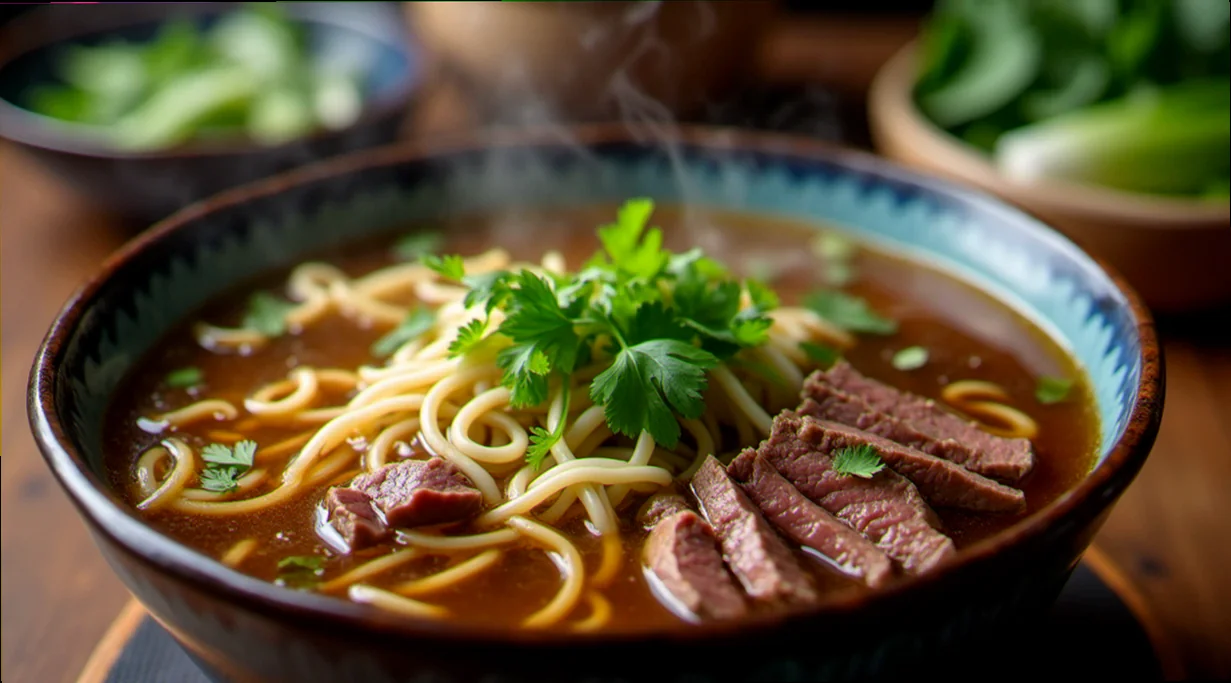
Taiwanese beef noodle soup - a symphony of umami and tender beef swimming in a rich, deeply savoury broth, boasting a delightfully chewy noodle texture and a subtle hint of sweetness. The magic lies in the slow braising process, which gently breaks down the beef, creating an intensely flavourful sauce that clings to every strand of noodle and elevates the entire experience. This recipe focuses on achieving that perfect balance - a broth that's both intensely flavourful and remarkably clean, avoiding the overly salty pitfalls common in lesser versions.
Recipe Overview
| Detail | Value |
|---|---|
| Dish | Taiwanese Beef Noodle Soup (牛肉麵, niúròu miàn) |
| Cuisine / category | Taiwanese, Soup |
| Prep time | 25 minutes |
| Cook time | 2.5 - 3 hours |
| Total time | 2.75 - 3.5 hours |
| Servings | 4-6 |
| Difficulty | Medium |
| Key technique | Slow Braising |
| Flavour profile | Umami, Savoury, Slightly Sweet |
| Best served | Weeknight Dinner, Comfort Food |
Ingredients
This ingredient list is meticulously crafted to build layers of flavour and achieve the signature texture of Taiwanese beef noodle soup. The star, of course, is the beef, which benefits immensely from a long, slow braise. Alongside it, we have aromatics that provide depth, a touch of sweetness to balance the savoury notes, and a complex spice blend that's both warming and invigorating. The key to a truly exceptional bowl is the quality of the broth - it needs to be rich, intensely flavourful, and just slightly oily, clinging beautifully to the noodles.
- Beef Chuck Roast: 800g, cut into 5cm cubes - providing the foundational richness and tender texture.
- Dried Shiitake Mushrooms: 150g, rehydrated in 300ml hot water for 30 minutes, reserve the soaking liquid - adding a deep umami flavour and earthy notes.
- Yellow Onion: 1 large (approx. 200g), roughly chopped - contributing sweetness and aromatic complexity.
- Garlic: 6 cloves, finely minced - essential for building flavour.
- Ginger: 3cm piece, peeled and thinly sliced - adding warmth and a subtle spice.
- Star Anise: 3 whole - imparting a subtle licorice flavour.
- Cinnamon Stick: 2 inches (5cm) - adding warmth and depth.
- Bay Leaves: 2 - contributing a subtle herbaceous note.
- Dark Soy Sauce: 80ml - providing colour and a concentrated savoury flavour.
- Light Soy Sauce: 60ml - adding saltiness and umami.
- Shaoxing Wine: 60ml - deglazing the pan and adding complexity.
- Brown Sugar: 30g - balancing the savoury flavours with a touch of sweetness.
- Chicken Stock: 2 Litres - forming the base of the broth.
- Dried Sichuan Peppercorns: 10g - adding a tingling, numbing sensation (optional, but highly recommended).
- Rice Noodles (Flat, Wide): 300g - providing the chewy texture that's central to the dish.
- Green Onions: 3, thinly sliced - for garnish.
- Hard-Boiled Eggs: 2, halved - for garnish.
- Vegetable Oil: 30ml - for searing the beef.
Step-by-Step Method
The method prioritizes a slow, gentle braising process, allowing the beef to become incredibly tender and the flavours to meld together beautifully. Starting with searing the beef builds a rich fond in the pan, which is then deglazed with Shaoxing wine and used to create the base of the broth. The slow simmering ensures the beef remains succulent and the broth develops its signature depth.
- Step 1 - Sear the Beef: Heat vegetable oil in a large, heavy-bottomed pot or Dutch oven over high heat. Add the beef cubes in batches, ensuring not to overcrowd the pot. Sear on all sides until deeply browned - approximately 3-4 minutes per batch. This creates a Maillard reaction, developing complex flavours and a beautiful crust.
- Step 2 - Sauté Aromatics: Remove the beef from the pot and set aside. Add the chopped onion, minced garlic, and sliced ginger to the pot and sauté until softened and fragrant - approximately 5 minutes.
- Step 3 - Deglaze and Build the Broth: Pour in the Shaoxing wine and scrape up any browned bits from the bottom of the pot (this is crucial for flavour!). Add the dark soy sauce, light soy sauce, brown sugar, star anise, cinnamon stick, bay leaves, and rehydrated shiitake mushrooms (including the soaking liquid - strain it first to remove any sediment).
- Step 4 - Braise the Beef: Return the seared beef to the pot. Pour in the chicken stock until the beef is almost completely submerged. Bring to a gentle simmer, then reduce the heat to low, cover, and braise for 2-2.5 hours, or until the beef is fork-tender. Check periodically and add more stock if needed to keep the beef covered.
- Step 5 - Add Sichuan Peppercorns: In the last 30 minutes of braising, add the dried Sichuan peppercorns.
- Step 6 - Cook the Noodles: While the beef is braising, cook the rice noodles according to package directions. Drain well.
- Final step - Assemble and Serve: Divide the cooked noodles among bowls. Ladle the beef and broth over the noodles. Garnish with sliced green onions and halved hard-boiled eggs. Serve immediately.
The Science Behind Taiwanese Beef Noodle Soup
The key to Taiwanese beef noodle soup's incredible flavour and texture lies in the Maillard reaction, which occurs during the searing of the beef. This chemical reaction between amino acids and reducing sugars creates hundreds of flavour compounds, contributing to the rich, savoury depth of the broth. The slow braising process is equally important; it allows the collagen in the beef to break down, resulting in a remarkably tender and melt-in-your-mouth texture. The addition of shiitake mushrooms amplifies the umami flavour through the production of glutamate, a naturally occurring flavour enhancer. The Sichuan peppercorns introduce a unique tingling sensation, known as ‘ma la' - a hallmark of Sichuan cuisine, adding a complex layer of sensory experience. The careful balance of sweet, salty, and savoury elements creates a harmonious and deeply satisfying flavour profile.
Ingredient Substitutions and Variations
While authenticity is key, substitutions are sometimes necessary. Here are a few options to consider:
- Beef Chuck Roast → Brisket: Brisket offers a similar level of richness and tenderness, though it may require a slightly longer braising time. The flavour impact is very similar.
- Dark Soy Sauce → Molasses: Molasses can be used as a substitute for dark soy sauce, providing a similar colour and sweetness, though it will impart a slightly different flavour profile. Use sparingly - about 2 tablespoons. Verdict: Use only if necessary.
Make-Ahead, Storage, and Reheating
This dish is remarkably well-suited for make-ahead preparation. The broth can be made 2-3 days in advance and stored in an airtight container in the refrigerator. The beef can also be braised ahead of time and reheated. To reheat, gently warm the broth and beef in a saucepan over low heat. When reheating the noodles, add a splash of hot water to prevent them from drying out. For optimal texture, store the cooked noodles separately and add them just before serving. Store the assembled soup in a container in the refrigerator for up to 3 days, or freeze for up to 3 months. Reheat gently in a saucepan or microwave, adding a little water if needed.
What to Serve With Taiwanese Beef Noodle Soup
Taiwanese beef noodle soup is a wonderfully versatile dish that pairs well with a variety of sides. A simple plate of blanched bok choy or gai lan (Chinese broccoli) provides a refreshing counterpoint to the richness of the soup. Steamed dumplings, particularly pork and chive dumplings, offer a delightful textural contrast. For a more substantial meal, consider serving alongside a side of stir-fried vegetables with garlic and chili. This combination is particularly well-suited for a weeknight dinner or a comforting weekend meal.
Common Mistakes and How to Avoid Them
- Mistake 1: Overcrowding the Pot: Searing the beef in batches prevents the pot from cooling down, ensuring a proper sear and flavour development.
- Mistake 2: Not Deglazing the Pot: Scraping up the browned bits (fond) from the bottom of the pot is crucial for transferring those concentrated flavours into the broth.
- Mistake 3: Under-braising the Beef: Allowing the beef to braise for a sufficient amount of time - at least 2 hours - is essential for achieving a truly tender texture. Check for tenderness with a fork; it should slide in easily.
Frequently Asked Questions
Can I make Taiwanese beef noodle soup recipe ahead of time?
Yes! The broth and beef can be made 2-3 days in advance and stored in the refrigerator. The noodles should be cooked and added just before serving to prevent them from becoming soggy.
How do I know when Taiwanese beef noodle soup recipe is cooked properly?
The beef should be fork-tender, meaning it slides easily into the meat. The broth should be rich, deeply flavoured, and slightly oily. The Sichuan peppercorns should have imparted their signature tingling sensation.
What is the best substitute for dark soy sauce in Taiwanese beef noodle soup recipe?
Molasses can be used as a substitute, but use it sparingly as it has a stronger flavour. Alternatively, a combination of regular soy sauce and a touch of brown sugar can mimic the colour and sweetness.