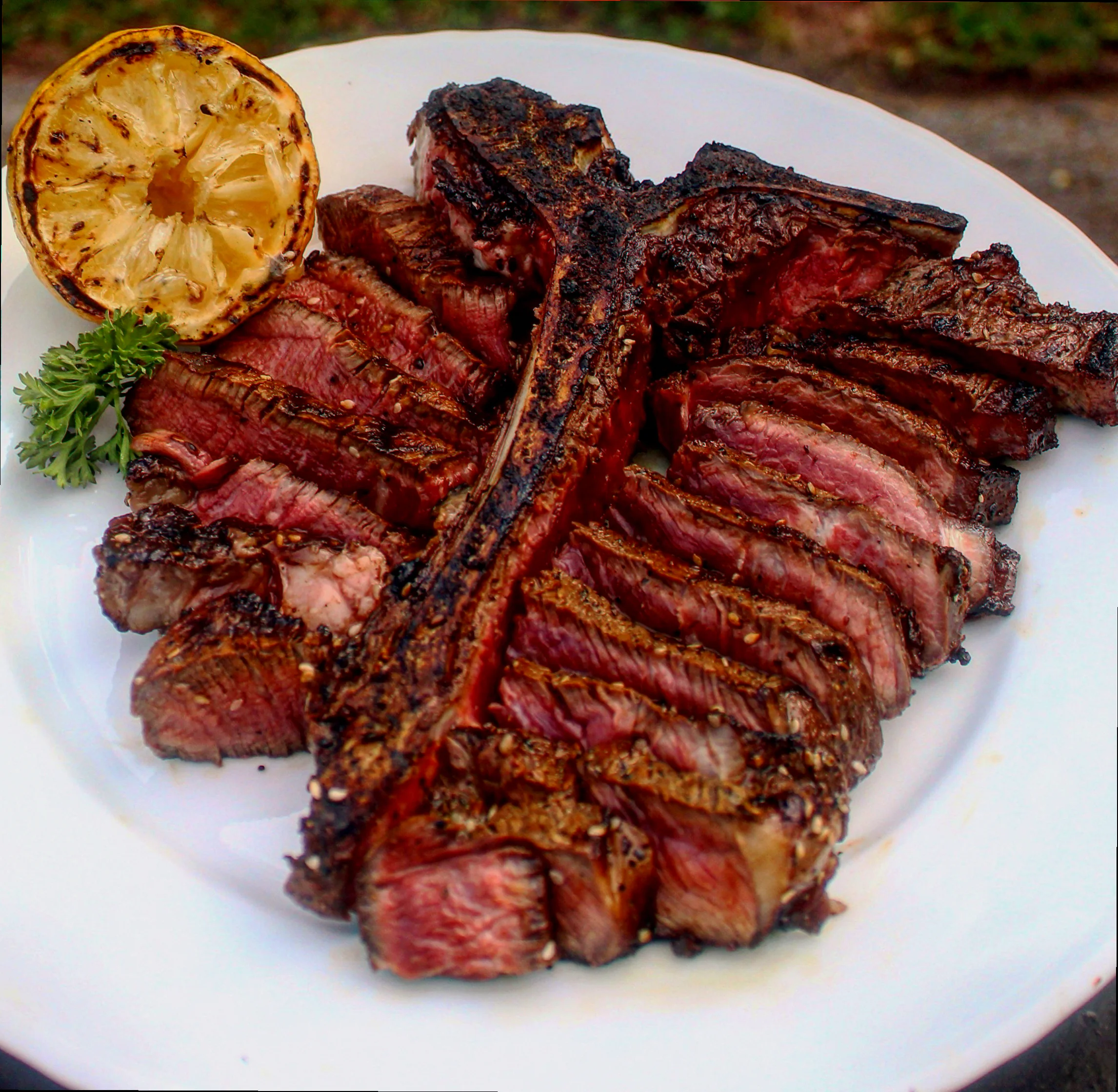
The success of a master-level Porterhouse steak relies on the harmonious interplay between two distinct muscle groups-the buttery tenderloin and the robustly flavoured top loin-divided by a singular, heat-conducting lumbar vertebra. This version excels by leveraging the Maillard reaction through a high-thermal-mass sear and a continuous butter-basting technique known as arroser, which ensures the leaner filet side remains succulent while the strip side achieves a deep, umami-rich crust. By controlling the surface moisture and using precise internal temperatures, you transform a primal cut of beef into a restaurant-quality centerpiece that balances smoky char with a melt-in-the-mouth interior.
Recipe Overview
| Detail | Value |
|---|---|
| Dish | Pan-Seared and Butter-Basted Porterhouse Steak |
| Cuisine / category | American Steakhouse / Main Course |
| Prep time | 45 minutes (includes tempering) |
| Cook time | 12 minutes |
| Total time | 57 minutes |
| Servings | 2 people |
| Difficulty | Medium |
| Key technique | Cast-iron searing and butter-basting (Arroser) |
| Flavour profile | Umami, smoky, herbaceous, and buttery |
| Best served | Romantic dinners or celebratory weekend meals |
Ingredients
The selection of ingredients focuses on enhancing the natural dry-aged profile of the beef while providing the necessary fats to create a uniform, crispy exterior. A thick-cut steak is essential here to prevent the interior from overcooking before the crust is fully developed.
- 850g to 1kg Porterhouse Steak: approximately 4cm to 5cm thick, brought to room temperature.
- 15g Kosher Salt: coarse grains are preferred for even distribution and moisture extraction.
- 8g Coarsely Cracked Black Peppercorns: provides a pungent, spicy contrast to the rich fat.
- 30ml Grapeseed or Avocado Oil: a high-smoke point neutral oil for the initial high-heat sear.
- 60g Unsalted Butter: high-fat European style butter is recommended for a foamier basting experience.
- 4 cloves Garlic (approx. 20g): smashed slightly to release essential oils without burning.
- 10g Fresh Rosemary: two whole sprigs to infuse the basting butter with woodsy notes.
- 5g Fresh Thyme: three to four sprigs for a subtle earthy undertone.
Step-by-Step Method
This method utilizes a sequence of moisture removal, high-intensity conductive heat, and gentle convective basting to ensure the steak reaches its target temperature evenly across its uneven anatomy.
- Step 1 - Temper and Dry: Remove the 850g steak from the refrigerator 45 minutes before cooking. Use a heavy-duty paper towel to pat every square centimetre of the surface bone-dry; moisture is the enemy of the crust. Season aggressively with the 15g of salt on all sides, including the thick fat cap along the strip edge.
- Step 2 - High-Heat Sear: Heat a heavy cast-iron skillet over high heat until the 30ml of oil begins to shimmer and produce a faint wisps of smoke. Place the steak in the pan using tongs, laying it away from you to avoid splashes. Press down lightly to ensure maximum contact. Sear for 3 minutes without moving the meat until you see a deep, mahogany-brown crust and hear a steady, aggressive sizzle.
- Step 3 - Edge Rendering: Using tongs, turn the steak onto its side to sear the fat cap. Hold it vertically for 60 seconds until the white fat renders into a golden-brown liquid and the aroma becomes nutty and intense.
- Step 4 - The Flip and Aromatics: Flip the steak to the second side. Immediately reduce the heat to medium-high and add the 60g of butter, smashed garlic, rosemary, and thyme. The butter will begin to foam and bubble almost instantly.
- Step 5 - Arroser (Butter Basting): Tilt the pan slightly so the melting butter pools at the bottom with the aromatics. Use a large metal spoon to continuously drench the steak with the hot, flavoured butter. Target the bone and the thicker parts of the meat. Continue this for 4-5 minutes, or until an instant-read thermometer inserted into the thickest part of the strip reaches 52°C for medium-rare.
- Step 6 - Rest and Serve: Transfer the steak to a warm wooden cutting board or a wire rack. Pour the remaining pan juices and charred aromatics over the meat. Allow it to rest undisturbed for at least 8 to 10 minutes. This allows the muscle fibres to relax and reabsorb the internal juices, ensuring a succulent texture when sliced.
The Science Behind the Porterhouse
Creating the perfect Porterhouse is an exercise in thermodynamics. The Maillard reaction-a chemical reaction between amino acids and reducing sugars-occurs most efficiently at temperatures between 140°C and 165°C. By drying the surface of the meat, we ensure that energy from the pan goes directly into browning rather than evaporating surface water. The presence of the bone in a Porterhouse adds a layer of complexity; bone is an insulator, meaning the meat directly adjacent to the bone will cook more slowly than the rest of the steak. This is why basting with hot butter is critical-it delivers supplemental heat to those "cold spots" near the bone, ensuring a more uniform internal temperature. Furthermore, the arroser technique provides a constant bath of fat-soluble flavour compounds from the garlic and herbs, which are absorbed into the crust, deepening the sensory profile of the dish.
Ingredient Substitutions and Variations
While the classic Porterhouse is a gold standard, specific environmental or dietary needs may require adjustments to the core components.
- Porterhouse Steak → T-Bone Steak: If a true Porterhouse is unavailable, a T-Bone is a direct anatomical substitute. The primary impact is a smaller tenderloin section; keep a close eye on the filet side as it will cook faster due to its reduced mass. Verdict: Works well.
- Unsalted Butter → Ghee (Clarified Butter): Ghee has a significantly higher smoke point (250°C). Using ghee allows for a hotter basting process without the risk of burning milk solids, resulting in a cleaner, nuttier flavour but less of the "brown butter" aroma. Verdict: Recommended for high-heat enthusiasts.
- Fresh Rosemary → Dried Thyme: If fresh herbs are unavailable, use 1 teaspoon of dried herbs mixed into the oil. Note that dried herbs can burn easily and may become bitter; it is better to use them as a rub rather than in the basting butter. Verdict: Use only if necessary.
- Dietary Variation - Dairy-Free: Substitute the butter with a high-quality vegan butter alternative or simply continue basting with the rendered beef fat and oil. Add a splash of Worcestershire sauce (if diet allows) to mimic the umami of the milk solids.
- Flavour Variation - Spicy Garlic: Add 5g of red chili flakes and 20ml of soy sauce during the basting phase for an "East-meets-West" steakhouse profile with increased piquancy.
Make-Ahead, Storage, and Reheating
While steak is best enjoyed immediately, you can prepare by salting the meat up to 24 hours in advance and leaving it uncovered in the refrigerator on a wire rack. This "dry-brining" process further concentrates the beef flavour and ensures an even better crust. For leftovers, store the steak in an airtight glass container at 4°C for up to 3 days. To reheat without losing the tender texture, place the steak in an oven at 120°C until the internal temperature reaches 45°C, then flash-sear it in a hot pan for 30 seconds per side to restore the crispiness of the crust. Avoid the microwave, as it will turn the delicate tenderloin rubbery and grey.
What to Serve With Porterhouse
A dish as rich as the Porterhouse requires sides that can either cut through the fat with acidity or complement the umami with earthy depth.
- Garlic Confit Mashed Potatoes: The creamy, starchy texture of the potatoes provides a canvas for the leftover basting butter from the pan. This is a classic steakhouse pairing for celebratory occasions.
- Charred Broccolini with Lemon and Chili: The bitterness of the charred greens and the acidity of the lemon juice act as a palate cleanser, balancing the intense richness of the beef fat and butter.
- Classic Wedge Salad: A cold, crisp iceberg wedge with blue cheese dressing and crispy bacon provides a temperature and texture contrast that makes the warm, succulent steak stand out even more during a summer BBQ.
Common Mistakes and How to Avoid Them
- Mistake 1: Cooking the steak while cold. If the meat is straight from the fridge, the exterior will overcook and turn grey before the centre even begins to warm up. Always temper the meat for at least 45 minutes to ensure an even thermal gradient.
- Mistake 2: Using a thin, non-conductive pan. Thin stainless steel or non-stick pans cannot hold enough heat to maintain a sear once the cold meat hits the surface. Use a heavy cast-iron or carbon steel skillet to ensure the temperature stays high enough for the Maillard reaction.
- Mistake 3: Cutting the steak too soon. Slicing into a Porterhouse immediately after it leaves the pan will cause the internal pressure to push all the juices out onto the board. Wait 10 minutes; the internal temperature will rise slightly (carry-over cooking) and the juices will set, ensuring every bite is moist.
Frequently Asked Questions
Can I make Porterhouse recipe ahead of time?
You cannot cook the steak fully ahead