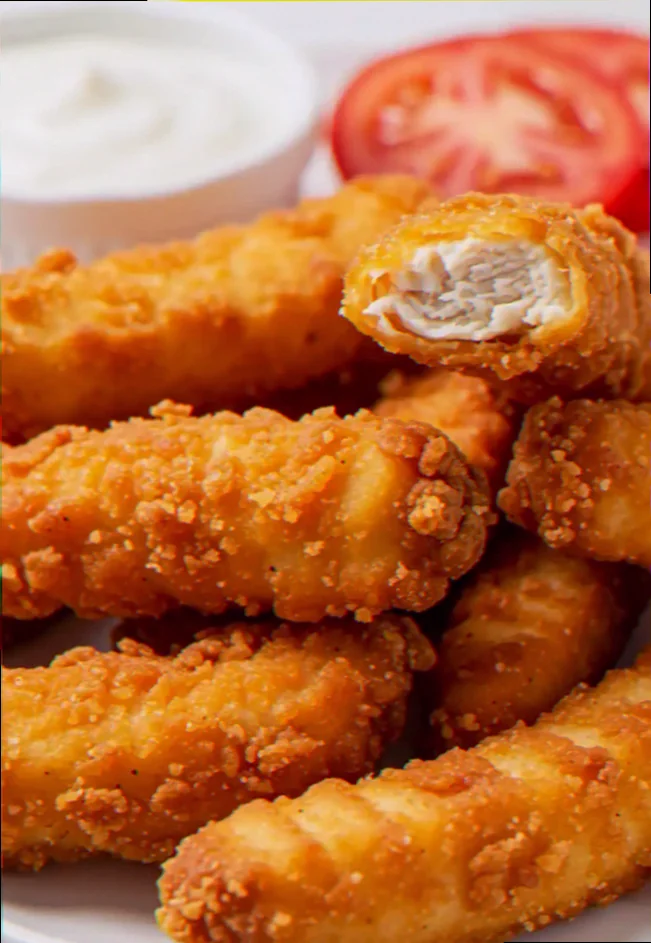
Sinking your teeth into a perfectly golden, baton-shaped chicken fry offers a satisfying crunch that yields to a succulent, savory interior. Achieving the ideal Chicken fries recipe relies heavily on the structural integrity of the chicken breast, the jagged surface area of Panko breadcrumbs, and the aromatic depth of smoked paprika. These three entities form the foundation of a dish that balances a high crunch-to-protein ratio with a quick-cooking format designed for maximum surface-area caramelization.
Quick Reference
| Field | Detail |
|---|---|
| Dish | Chicken Fries |
| Origin | American Fast-Casual Cuisine |
| Hero ingredients | Chicken breast, Panko breadcrumbs, Smoked paprika |
| Defining technique | Deep-frying (or Air-frying) |
| Texture | Crunchy, Succulent |
| Flavour | Savory, Peppery, Umami |
| Total time | 45 Minutes |
| Servings | 4 People |
| Pairs with | Craft Pilsner |
| Occasion | Game Day / Casual Dinner |
Ingredients - What Actually Matters and Why
Each component in this recipe serves a specific structural or chemical purpose to ensure the coating adheres and the meat remains hydrated during the high-heat transition.
- Chicken breast - 500g, sliced into 1cm x 8cm batons - This lean protein provides the necessary rigidity to maintain the "fry" shape without bending.
- Panko breadcrumbs - 150g, finely crushed - Unlike standard crumbs, Panko's airy, flake-like structure creates microscopic pockets that trap air, leading to a lighter, more durable crunch.
- Smoked paprika - 1 tablespoon - This provides the characteristic "fast-food" amber hue and a foundational wood-smoke aroma that mimics outdoor grilling.
- All-purpose flour - 100g - Acts as the primary moisture barrier, drying the surface of the meat so the egg wash can bond.
- Large eggs - 2 units, beaten - The protein-rich adhesive that bridges the flour-dusted chicken to the outer breadcrumb shell.
- Garlic powder - 1 teaspoon - Infuses the breading with a sharp, savory bite that survives the high temperatures of the oil.
- Onion powder - 1 teaspoon - Adds a subtle sweetness and "allium" depth to the flavor profile.
- Kosher salt and cracked black pepper - To taste - Essential for seasonal balance and drawing out the natural juices of the poultry.
- Neutral oil (Canola or Vegetable) - 1 liter for frying - High smoke point oil is required to achieve the Maillard reaction without scorching the breading.
Method: Deep-Frying Step by Step
The sequence of operations follows the "Standard Breading Procedure," a professional culinary technique designed to create a multi-layered shell that protects the meat while texturizing the exterior.
- Slice - Prepare the batons: Using a sharp chef's knife, divide the chicken breast into uniform strips approximately 1cm wide; consistency is key to ensuring all pieces reach an internal temperature of 74°C simultaneously.
- Dredge - Apply the base coat: Toss the chicken strips in the seasoned flour until every crevice is matte and dry; if you see damp spots, the coating will likely slide off during frying.
- Submerge - Hydrate the binder: Dip the floured strips into the beaten egg wash; you should hear a slight squelch as the egg coats the flour, creating a sticky "glue" layer.
- Encrust - Press the Panko: Roll the chicken in the Panko and paprika mixture, pressing firmly with your palms; you want the crumbs to be embedded into the egg wash to prevent "bald spots."
- Sizzle - Execute the fry: Heat the oil to 175°C in a heavy-bottomed pot and gently lower the strips into the fat; look for vigorous, small bubbles and a golden-amber color change within 3 to 4 minutes.
- Drain - Set the texture: Transfer the cooked fries to a wire cooling rack rather than a paper towel; this allows air to circulate around the entire baton, preventing steam from softening the bottom crust.
- Finish and plate: Dust with a final pinch of sea salt while the surface oil is still shimmering; serve in a vertical parchment-lined basket to highlight the uniform, slender "fry" aesthetic.
Authentic vs Adapted: What Changes and What Doesn't
The "authentic" chicken fry is a product of American fast-food innovation, specifically popularized in the early 2000s as a hybrid between a chicken nugget and a French fry. In its original commercial form, it is often made from a reconstituted chicken paste that is extruded into shapes. Our home-cooked version is an "elevated adaptation" that uses whole-muscle chicken breast. While the shape is non-negotiable-if it isn't a long, thin baton, it is simply a chicken strip-the breading can be adapted. However, replacing the Panko with standard breadcrumbs fundamentally changes the identity of the dish from "Chicken Fry" to "Chicken Finger," as the signature "spiky" texture of the fry is lost. Traditionalists argue that the seasoning must remain heavy on the paprika and garlic to maintain the nostalgic flavor profile of the American snack entity.
Substitutions That Work (and Ones That Don't)
- Panko breadcrumbs → Crushed Cornflakes: This provides an even more aggressive crunch and a hint of corn-sweetness; it is a highly recommended substitute for a more rustic texture.
- Chicken breast → Chicken thigh: While more flavorful and juicy, thighs are softer and will not hold the rigid "fry" shape as well; use this only if you don't mind a "wiggly" chicken fry.
- For dietary needs - Gluten-free: Swap the all-purpose flour for cornstarch and use gluten-free Panko or crushed pork rinds; the cornstarch actually creates an even crispier initial barrier than wheat flour.
- Budget swap: Replace the smoked paprika with a mix of chili powder and a drop of liquid smoke in the egg wash; this approximates the flavor but lacks the vibrant color of the high-quality spice entity.
What to Serve Alongside Chicken Fries
To round out the meal, pair this dish with co-occurring entities like Creamy Coleslaw or Loaded Potato Skins. The acidity of the coleslaw cuts through the richness of the fried breading, while the potato skins reinforce the "pub food" occasion. For the beverage, a Craft Pilsner is the ideal drink entity. The high carbonation acts as a palate cleanser, scrubbing the tongue of oil, while the crisp, floral hops of the beer complement the earthy notes of the smoked paprika and garlic powder.
Troubleshooting: Why Your Chicken Fries Went Wrong
If your chicken fries turned out disappointing, it usually stems from a breakdown in the moisture-barrier technique or temperature control.
- Symptom: The coating is soggy and oily. This is caused by "low-temperature saturation." If the oil is below 160°C when the chicken is added, the breading absorbs the fat rather than searing. The Fix: Use a kitchen thermometer to ensure the oil hits 175°C and fry in small batches to prevent the temperature from dropping.
- Symptom: The breading falls off in the pan. This is caused by "surface moisture." If the chicken wasn't patted dry before the flour dredge, steam builds up between the meat and the crust, blowing the coating off. The Fix: Always pat the raw meat with paper towels until bone-dry before starting the breading process.
- Symptom: The chicken is dry and rubbery. This is a result of "over-extraction." Because the fries are thin, they cook incredibly fast. The Fix: Pull the fries out as soon as they reach a golden-brown hue; the residual heat will carry them to the safe internal temperature of 74°C during the resting phase.
Make-Ahead and Storage
You can absolutely prep this Chicken fries recipe the night before. Follow the breading steps, place the raw fries on a baking sheet lined with parchment paper, and refrigerate uncovered for up to 24 hours. This actually helps the coating adhere better as the flour hydrates. For long-term storage, flash-freeze the raw breaded fries on a tray for 2 hours, then transfer to a vacuum-sealed bag for up to 3 months. When reheating, avoid the microwave at all costs as it will turn the Panko into a gummy mess. Instead, use an oven or air fryer at 200°C for 5-8 minutes to reactivate the crunch of the crust.
Recipe Questions Answered
What makes Chicken Fries different from Chicken Tenders?
The difference lies in the geometry and the "Standard Breading Procedure." Tenders use the natural "pectoralis minor" muscle, which is tapered and thick. Chicken fries are precision-cut