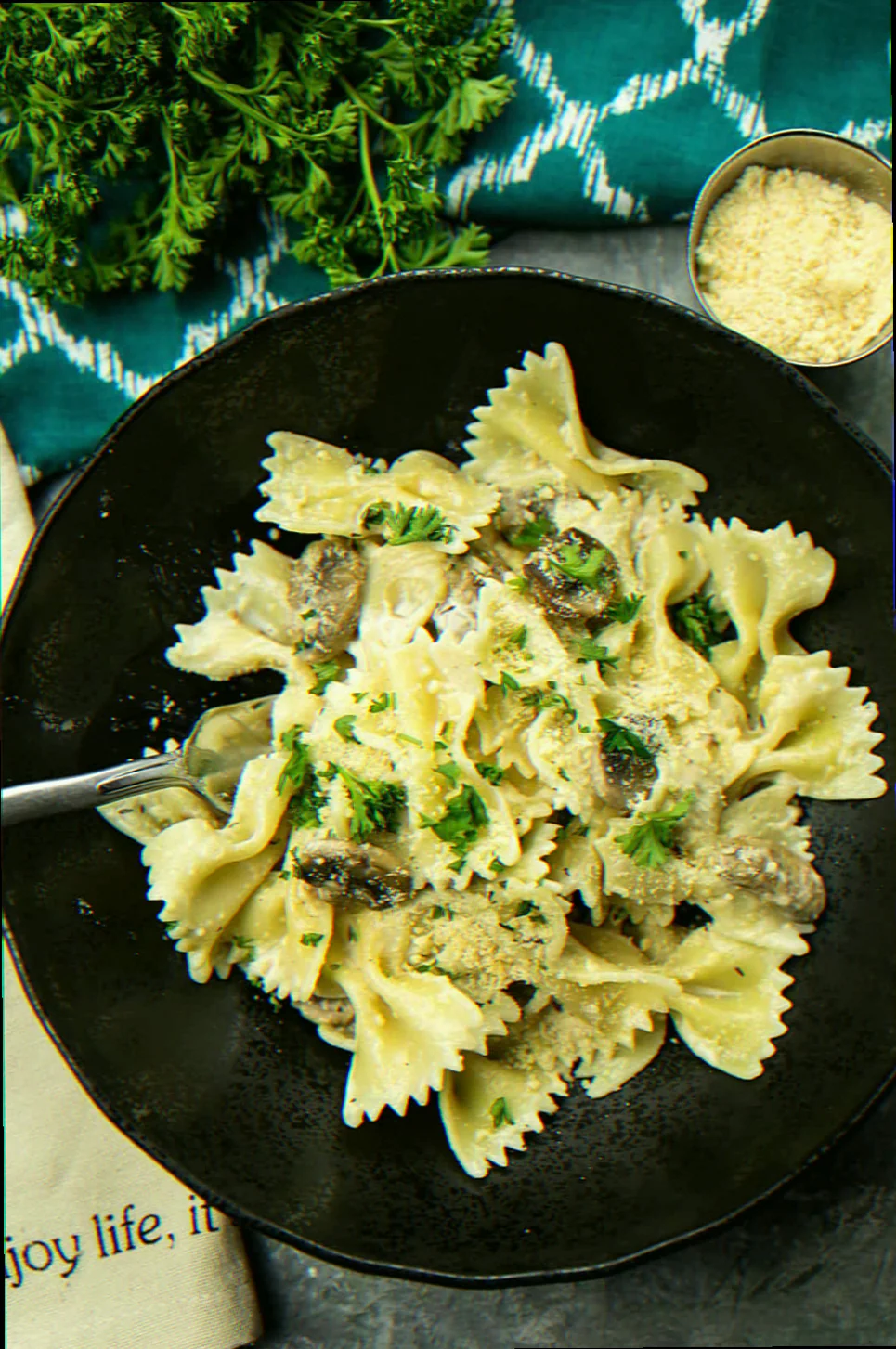
Farfalle, meaning 'butterflies' in Italian, are a pasta shape celebrated for their playful form and ability to capture sauce in their ruffled edges. Originating in the Emilia-Romagna and Lombardy regions of Italy during the 16th century, farfalle's unique texture arises from the precise balance of durum wheat semolina and water, creating a resilient gluten network that holds its shape during cooking and provides a satisfying al dente bite. The key to a successful farfalle dish lies in achieving perfect pasta hydration and a sauce that clings effectively to its intricate surface.
Complete Recipe Overview
| Property | Detail |
|---|---|
| Dish entity | Farfalle with Lemon-Garlic Shrimp |
| Cuisine origin | Italian (Emilia-Romagna & Lombardy) |
| Defining technique | Pasta Boiling & Sauce Emulsification |
| Hero ingredients | Farfalle, Shrimp, Lemon |
| Critical ratio | Pasta:Liquid (1:6 by volume) |
| Prep time | 20 minutes |
| Cook time | 15 minutes at 100°C |
| Rest / chill time | None |
| Yield | 4 servings |
| Difficulty | Easy - this recipe relies on straightforward techniques and readily available ingredients, making it ideal for beginner cooks. |
Ingredients: Quantities, Roles, and Critical Ratios
This recipe centers around the interplay between the starchy farfalle, the protein-rich shrimp, and the bright acidity of lemon. The critical ratio of 1:6 (pasta to water) ensures the farfalle cooks evenly without becoming mushy or sticking together. The emulsification of olive oil and lemon juice creates a light yet flavourful sauce that coats the pasta beautifully.
- Farfalle - 320g - Role: Provides the carbohydrate base and textural foundation of the dish.
- Shrimp (large, peeled & deveined) - 340g - Role: Contributes protein and a delicate seafood flavour.
- Lemon - 2 (zest and juice) - Role: Adds brightness, acidity, and aromatic complexity.
- Olive Oil - 60ml - Role: Forms the base of the sauce and aids in flavour transfer.
- Garlic - 4 cloves (minced) - Role: Provides pungent aroma and flavour.
- Red Pepper Flakes - 1/4 tsp - Role: Adds a subtle heat.
- Fresh Parsley - 30g (chopped) - Role: Provides freshness and visual appeal.
- Salt - to taste
- Black Pepper - to taste
The Science of Gluten Network Formation
The success of farfalle, and indeed all pasta, hinges on the development of a robust gluten network. Gluten is formed when gliadin and glutenin proteins, present in durum wheat semolina, are hydrated and mechanically worked (kneading). This process creates long, elastic strands that trap gas bubbles (during fermentation in some pasta types, though not this one) and provide structure. The amount of water added is crucial; too little and the gluten won't develop properly, resulting in a crumbly texture. Too much, and the gluten becomes overly relaxed, leading to a sticky, mushy pasta. The al dente texture we seek is achieved when the starch granules within the pasta have absorbed water and gelatinized, but the gluten network still retains some resistance to the bite. Cooking farfalle in generously salted water (about 10g salt per 4L water) not only seasons the pasta but also strengthens the gluten network by increasing ionic interactions between the protein strands.
Method: Pasta Boiling & Sauce Emulsification at Every Critical Stage
This method prioritizes achieving perfectly cooked pasta and a cohesive sauce that clings to the farfalle's unique shape.
- Boil - Water: Bring 4L of salted water to a rolling boil (100°C).
- Add - Pasta: Add the farfalle and cook for 10-12 minutes, or until al dente - firm to the bite.
- Critical control point 1 - Doneness: Start testing for doneness at 10 minutes. Overcooked farfalle will become mushy and lose its shape. Reserve 120ml of pasta water before draining.
- Sauté - Aromatics: While the pasta cooks, heat olive oil in a large skillet over medium heat (180°C). Add garlic and red pepper flakes and sauté for 30 seconds, until fragrant. Do not brown the garlic.
- Cook - Shrimp: Add shrimp to the skillet and cook for 2-3 minutes per side, until pink and opaque.
- Emulsify - Sauce: Add lemon juice and zest to the skillet. Stir to combine.
- Critical control point 2 - Emulsification: If the sauce appears broken (oily and separated), gradually add a tablespoon of reserved pasta water at a time, whisking constantly, until the sauce emulsifies into a creamy consistency. This is where the starch from the pasta water acts as a stabilizer.
- Combine - Pasta & Sauce: Add the drained farfalle to the skillet and toss to coat. Add more pasta water if needed to create a saucy consistency.
- Finish - Parsley: Stir in chopped parsley.
- Rest - None: Serve immediately.
- Plate and serve: Arrange the farfalle in shallow bowls, ensuring the shrimp are visible and the sauce is evenly distributed. Garnish with an extra sprinkle of parsley and a lemon wedge.
Cultural and Historical Context of Italian Pasta
Pasta, a cornerstone of Italian cuisine, has a rich history dating back to ancient times. While the exact origins are debated, evidence suggests that pasta-like noodles were consumed in Sicily as early as the 12th century, likely influenced by Arab culinary traditions. The farfalle shape itself emerged in the 16th century in the Emilia-Romagna and Lombardy regions, inspired by the shape of butterflies. Historically, pasta was a staple food for the working class, providing a filling and affordable meal. Over time, it evolved into a symbol of Italian culinary artistry, with countless regional variations and sauce pairings.
Variations Across Italian Regions
- Campania: In Naples, farfalle is often served with a rich tomato-based sauce and ricotta salata, offering a savoury and slightly salty flavour profile.
- Sicily: Sicilian farfalle frequently incorporates ingredients like pistachios, raisins, and salsiccia (Italian sausage), creating a sweet and savoury combination.
- Vegan adaptation: Substitute the shrimp with roasted vegetables like zucchini, bell peppers, and eggplant. Use a vegetable broth-based sauce instead of shrimp stock.
- Modern adaptation: Incorporating truffle oil into the lemon-garlic sauce adds a luxurious and earthy dimension to the dish.
Storage, Freezing, and Reheating Farfalle with Lemon-Garlic Shrimp
Leftover farfalle is best consumed within 1-2 days. Store in an airtight container in the refrigerator at 4°C. Reheating can be done in a skillet with a splash of water or broth to prevent drying out. Freezing is not recommended, as the pasta texture will become significantly compromised. The sauce may separate upon thawing, resulting in a less appealing dish.
Pairing Farfalle with Lemon-Garlic Shrimp: Sides, Sauces, and Drinks
A simple green salad with a light vinaigrette complements the richness of the shrimp and pasta. A side of crusty bread is perfect for soaking up the remaining sauce. A crisp, dry white wine like Pinot Grigio or Vermentino pairs beautifully with the lemon and seafood flavours. Alternatively, a light-bodied Italian beer like a Peroni Nastro Azzurro provides a refreshing contrast.
Answers to the Most-Searched Questions About Farfalle recipes
What temperature should farfalle be cooked at - and how do I know it's done?
Farfalle should be cooked in boiling water (100°C). It's done when it's al dente - firm to the bite, with a slight resistance when chewed. Start testing for doneness at 10 minutes.
What is the difference between Farfalle recipes and Penne recipes?
Farfalle's ruffled edges and bow-tie shape create more surface area for sauce to cling to, making it ideal for lighter, more delicate sauces. Penne, with its tubular shape and ridges, is better suited for thicker, chunkier sauces that can fill the hollow interior.
Can Farfalle recipes be made in advance, and does it freeze well?
Farfalle is best served immediately after cooking. Making the sauce in advance is possible, but the pasta itself should be cooked fresh. Freezing is not recommended, as the texture of the pasta will deteriorate significantly.