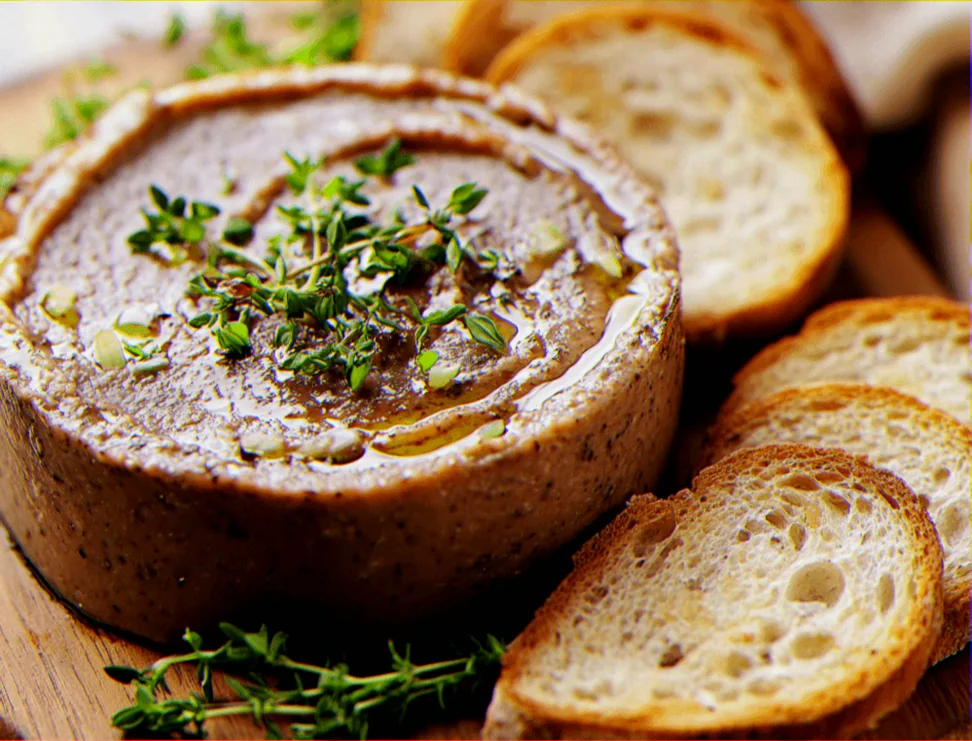
Liver pate, when expertly crafted, presents a luxuriously smooth, almost velvety texture punctuated by the deep, earthy richness of the liver itself. The slow rendering process, culminating in a gently browned exterior and a molten interior, creates a flavour profile that's both intensely savoury and subtly sweet - a testament to the careful balance of fat, spice, and aromatics. This recipe focuses on achieving that perfect balance, utilizing a meticulous technique to unlock the full potential of the liver and deliver a pate that's truly exceptional.
Recipe Overview
| Detail | Value |
|---|---|
| Dish | Liver Pate |
| Cuisine / category | French |
| Prep time | 20 minutes |
| Cook time | 90 minutes |
| Total time | 110 minutes |
| Servings | 8-10 |
| Difficulty | Medium |
| Key technique | Slow Rendering |
| Flavour profile | Umami, Earthy, Slightly Sweet |
| Best served | As an appetizer, with crusty bread, or alongside a glass of red wine |
Ingredients
This ingredient list is designed to build a pate with a supremely smooth texture and a deeply concentrated flavour. The key components - the liver itself, rendered fat, and carefully selected aromatics - work in harmony to create a truly decadent experience. We'll be using a combination of duck and beef liver for a complex flavour profile.
- Duck Liver - 500g (fresh, trimmed)
- Beef Liver - 250g (fresh, trimmed)
- Unsalted Butter - 100g (cold, cubed)
- Dry White Wine - 100ml (Sauvignon Blanc recommended)
- Shallots - 2 medium (finely diced, approximately 60g)
- Garlic - 2 cloves (minced)
- Fresh Thyme - 3 sprigs (leaves picked)
- Bay Leaf - 1 large
- Black Peppercorns - 10 (lightly crushed)
- Sea Salt - 15g (adjust to taste)
- Nutmeg - Pinch (freshly grated)
Step-by-Step Method
The method prioritizes slow rendering to gently break down the liver fibers, ensuring a supremely smooth pate and maximizing flavour extraction. Starting with a gentle sear builds a foundational flavour, while the gradual addition of wine and butter creates a luscious emulsion.
- Step 1 - Sear the Liver: Heat 25g of butter in a heavy-bottomed skillet (cast iron preferred) over medium-high heat. Add the duck and beef liver in batches, ensuring not to overcrowd the pan. Sear for 2-3 minutes per side, until deeply browned. This initial sear develops a crucial Maillard reaction, contributing to the depth of flavour. The liver should be a rich, dark brown colour.
- Step 2 - Deglaze and Reduce: Remove the seared liver from the skillet and set aside. Add the remaining 75g of butter to the skillet and allow it to melt. Add the finely diced shallots and minced garlic and sauté for 3-4 minutes, until softened and fragrant. Deglaze the pan with the dry white wine, scraping up any browned bits from the bottom. Bring to a simmer and reduce by half, approximately 5-7 minutes. This process concentrates the wine's flavour and creates a base for the emulsion.
- Step 3 - Return and Simmer: Return the seared liver to the skillet. Add the thyme sprigs, bay leaf, crushed black peppercorns, and sea salt. Cover the skillet and reduce the heat to low. Simmer gently for 60-75 minutes, or until the liver is incredibly tender and easily pierced with a fork. The internal temperature should reach 74°C.
- Step 4 - Emulsify and Finish: Remove the thyme sprigs and bay leaf. Using a food processor or immersion blender, carefully purée the liver mixture until completely smooth. Gradually add the nutmeg, tasting and adjusting as needed. The key here is to emulsify - incorporating air to create a velvety texture. Continue blending until the pate is incredibly smooth and glossy.
- Final step - Rest and Serve: Transfer the liver pate to a ramekin or small dish. Cover tightly with plastic wrap, pressing the wrap directly onto the surface of the pate to prevent a skin from forming. Refrigerate for at least 2 hours, or preferably overnight, to allow the flavours to meld and the pate to firm up. Before serving, gently warm the pate slightly if desired. Serve chilled or at room temperature with crusty bread, crackers, or vegetable crudités.
The Science Behind Liver Pate
The success of this liver pate hinges on the Maillard reaction, a chemical reaction between amino acids and reducing sugars that occurs when food is heated. The initial searing of the liver creates the ideal conditions for this reaction to occur, developing complex flavour compounds. Simultaneously, the slow rendering process breaks down the collagen in the liver, contributing to the incredibly smooth texture. The reduction of the wine creates a concentrated flavour base, while the butter acts as an emulsifier, binding the fat and water-based components together to form a stable emulsion - a crucial element for achieving that luxurious, velvety consistency. The nutmeg adds a subtle warmth and complexity, balancing the richness of the liver.
Ingredient Substitutions and Variations
While the specific combination of liver types contributes to a unique flavour, substitutions are possible. Understanding the impact on texture and flavour is key.
- Duck Liver → Beef Liver: The flavour will be slightly less intense, leaning more towards a savoury, rather than a deeply rich, taste. The texture will also be marginally firmer. Use only if necessary.
- Beef Liver → Pork Liver: This will result in a milder flavour profile and a slightly lighter texture.
- Dry White Wine → Dry Vermouth: Vermouth offers a similar aromatic complexity, though with a slightly more herbal note.
Make-Ahead, Storage, and Reheating
Liver pate is exceptionally well-suited for make-ahead preparation. The flavours deepen significantly over time. You can prepare the pate up to 3 days in advance. Store in an airtight container in the refrigerator for up to 3 days. For longer storage, freeze the pate in an airtight container for up to 3 months. To reheat, gently warm in a saucepan over low heat, stirring constantly, or in the microwave in 30-second intervals, until warmed through. Avoid overheating, as this can cause the pate to separate. A container with a tight-fitting lid is ideal for freezing - a small glass jar or a freezer-safe plastic container works well.
What to Serve With Liver Pate
Liver pate's rich, savoury flavour pairs beautifully with a variety of accompaniments. It's a classic pairing with crusty baguette for spreading, but its versatility extends beyond that. Consider serving it alongside a crisp green salad with a light vinaigrette to balance the richness. A selection of cured meats, such as prosciutto or salami, also complements the pate's flavour profile. For a more substantial pairing, try it with a warm, rustic sourdough bread. Finally, liver pate is a sophisticated addition to a cheese board, particularly alongside strong blue cheeses like Roquefort or Stilton - the combination of earthy flavours is truly exceptional.
Common Mistakes and How to Avoid Them
- Mistake 1: Overcrowding the Pan: Overcrowding the pan during searing will lower the temperature and prevent the liver from browning properly. Sear in batches to ensure even browning.
- Mistake 2: Under-Simmering: Insufficient simmering time will result in a tough, chewy pate. Ensure the liver simmers gently for the full 60-75 minutes.
- Mistake 3: Over-Blending: Over-blending can incorporate too much air, resulting in a grainy texture. Blend just until smooth, stopping when the pate reaches the desired consistency.
Frequently Asked Questions
Can I make Liver pate recipe ahead of time?
Yes, liver pate is ideal for making ahead. It improves in flavour over time. Prepare up to 3 days in advance and store in an airtight container in the refrigerator.
How do I know when Liver pate recipe is cooked properly?
The liver is cooked properly when it's incredibly tender and easily pierced with a fork. An internal temperature of 74°C is a good indicator. The texture should be smooth and velvety.
What is the best substitute for beef liver in Liver pate recipe?
Duck liver is the closest substitute in terms of flavour and texture. Pork liver can also be used, but it will result in a milder flavour.